UK Stocked
Technical specifications
Molecular formula
C₂₁H₂₇N₇O₁₄P₂
Purity
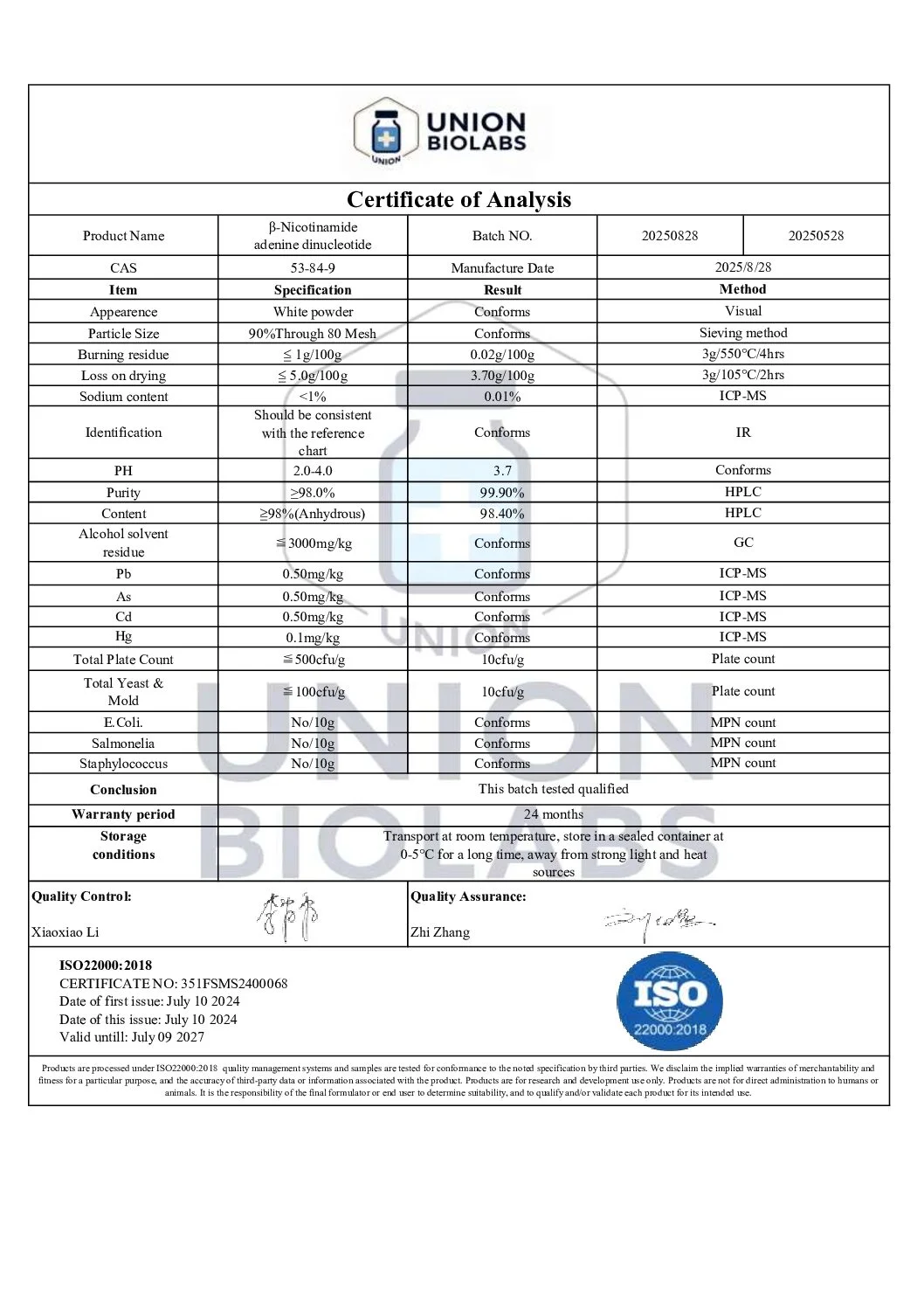
≥ 99% (HPLC verified)
Storage
-20°C
CAS Number
53-84-9
Molecular weight
663.43 g/mol
Reconstitution
-
Research applications
–
- For research use only
Not for human consumption, veterinary, or diagnostic use. Handled by qualified researchers only.
Description
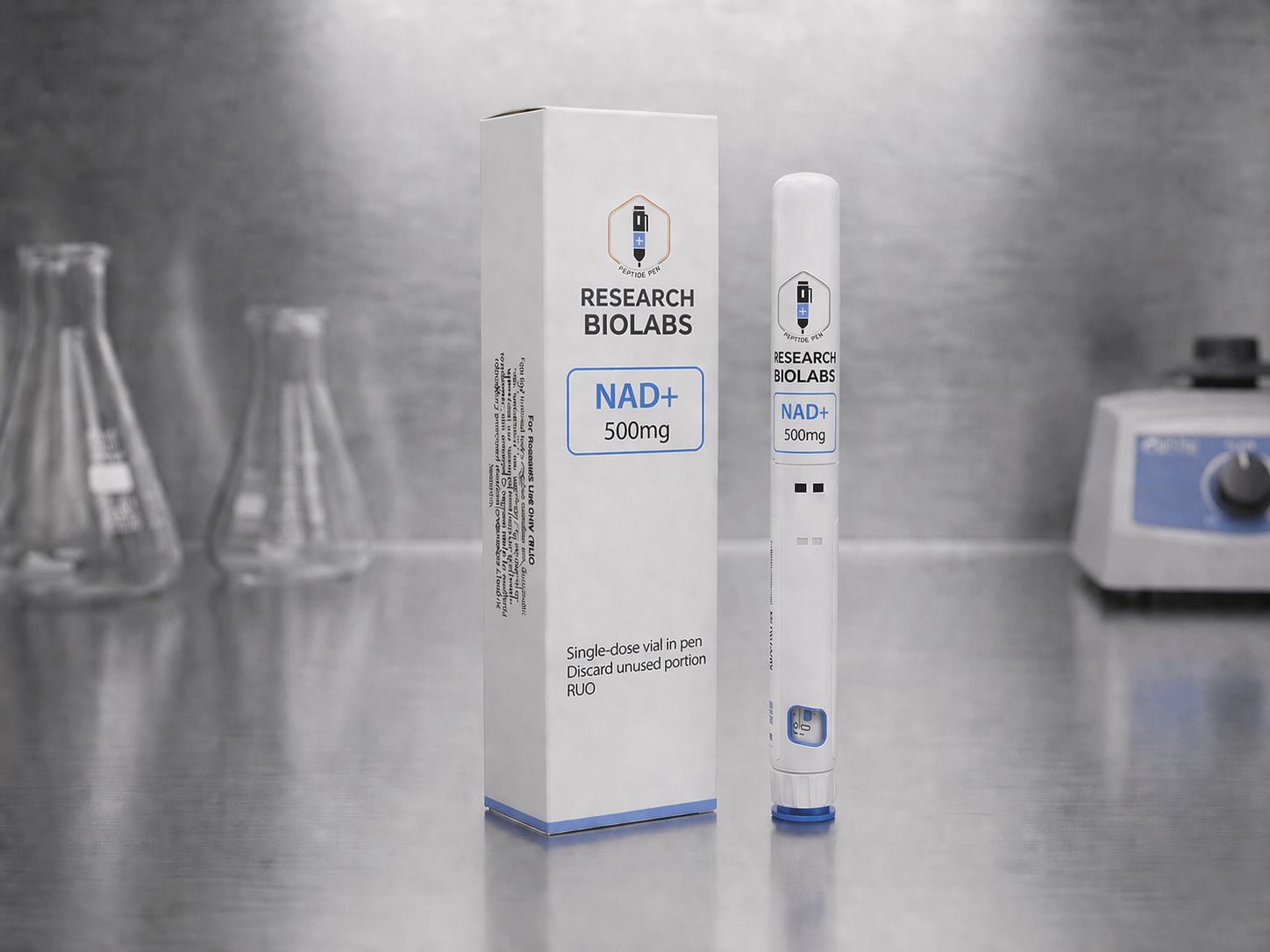
NAD+ (β-Nicotinamide Adenine Dinucleotide) 500mg – High Purity Lyophilised Research Powder
NAD+ (β-Nicotinamide adenine dinucleotide) is a critical coenzyme that supports essential biochemical processes across all living cells. Our NAD+ 500mg research-grade powder features a high-purity, HPLC-verified, lyophilised formulation designed exclusively for laboratory research applications. Furthermore, we manufacture and handle every batch under controlled conditions to ensure consistency, traceability, and analytical reliability for scientific studies.What is NAD+ (Nicotinamide Adenine Dinucleotide)?
NAD+ is a naturally occurring coenzyme found in all living cells, where it plays a fundamental role in cellular energy metabolism and redox reactions. Additionally, it functions as a key electron carrier during the conversion of nutrients into cellular energy (ATP) through the NAD+/NADH redox cycle, helping maintain metabolic balance. Researchers also study NAD+ extensively for its involvement in:- Cellular energy transfer mechanisms
- Oxidation-reduction (redox) reactions
- Enzymatic activity regulation
- Mitochondrial metabolic pathways
Scientific Role of NAD+ in Cellular Biology
NAD+ is more than a metabolic cofactor. Instead, it serves as a central regulator of numerous cellular processes.1. Energy Metabolism
NAD+ facilitates electron transfer during metabolic reactions, thereby supporting ATP production through glycolysis and oxidative phosphorylation.2. DNA Repair Mechanisms
Enzymes such as PARPs (Poly ADP-ribose polymerases) consume NAD+ during DNA repair and genomic stability processes.3. Sirtuin Enzyme Activity
Moreover, NAD+ acts as an essential cofactor for sirtuin enzymes (SIRT1-SIRT7), helping regulate gene expression, stress responses, and metabolic efficiency.4. Redox Homeostasis
Finally, NAD+ helps maintain the balance between oxidation and reduction, supporting normal biochemical function.NAD+ vs NADH vs NMN (Scientific Comparison)
Understanding the relationship between these molecules provides important context for biochemical research.| Compound | Function | Role in Research |
|---|---|---|
| NAD+ | Oxidized coenzyme form | Central to redox reactions and metabolic pathways |
| NADH | Reduced form of NAD+ | Electron donor in cellular energy production |
| NMN | NAD+ precursor | Studied in NAD+ biosynthesis pathways |
Research Applications
Researchers use this NAD+ 500mg material in controlled biochemical and molecular laboratory studies, including:- Cellular metabolism studies
- Enzyme cofactor analysis
- Redox reaction research
- Mitochondrial function investigations
- NAD+/NADH cycle studies
- Sirtuin-related pathway research
- Biochemical energy transfer experiments
Product Specifications
| Parameter | Details |
|---|---|
| Compound | NAD+ (β-Nicotinamide Adenine Dinucleotide) |
| CAS Number | 53-84-9 |
| PubChem CID | 5892 |
| ChEMBL ID | ChEMBL1426 |
| Molecular Formula | C₂₁H₂₇N₇O₁₄P₂ |
| Molecular Weight | ~663.43 g/mol |
| Content | 500mg per vial |
| Form | Lyophilised (freeze-dried powder) |
| Purity | ≥99% (HPLC verified) |
| Storage | Store at –20°C in a dry, controlled environment |
| Documentation | Certificate of Analysis (COA) included with every batch |
| Origin | UK-stocked for rapid dispatch |
Quality Assurance & Testing
Furthermore, our quality control team verifies every batch of NAD+ through strict analytical testing to ensure reproducibility and high-purity standards for advanced research. Quality control includes:- High-Performance Liquid Chromatography (HPLC) purity testing
- Batch-specific analytical validation
- Controlled freeze-drying (lyophilisation)
- Stability and contamination screening
Stability & Storage Information
NAD+ is a sensitive biomolecule that degrades when exposed to heat, moisture, and prolonged light. To preserve product integrity:- Store at –20°C immediately upon receipt.
- Keep the vial in a dry, airtight container.
- Avoid repeated freeze-thaw cycles.
- Minimise exposure to humidity and ambient light.
Regulatory Statement
We supply this product exclusively for laboratory research purposes. It is:- Not intended for human consumption
- Not intended for diagnostic use
- Not intended for therapeutic or medical applications
- Not approved as a drug, supplement, or food product
Frequently Asked Questions (FAQ)
What is NAD+ used for in research?
Researchers use NAD+ to investigate cellular energy metabolism, redox reactions, enzyme activity, mitochondrial function, and related biochemical pathways.Is NAD+ the same as NMN?
No. NAD+ is the active coenzyme, whereas NMN serves as a precursor in NAD+ biosynthesis.Why should NAD+ be stored at –20°C?
Cold storage helps preserve molecular stability because NAD+ is sensitive to heat and moisture.What does ≥99% purity mean?
HPLC testing confirms that the material contains at least 99% NAD+ with minimal impurities.Is this NAD+ suitable for human use?
No. This product is strictly for laboratory research only and is not approved for human or veterinary use.What does CAS 53-84-9 represent?
CAS 53-84-9 is the internationally recognised Chemical Abstracts Service identifier assigned to NAD+.Scientific References
- PubChem: NAD+ Compound Profile (CID: 5892)
- NAD+/NADH redox biology literature
- Peer-reviewed molecular metabolism and sirtuin research publications