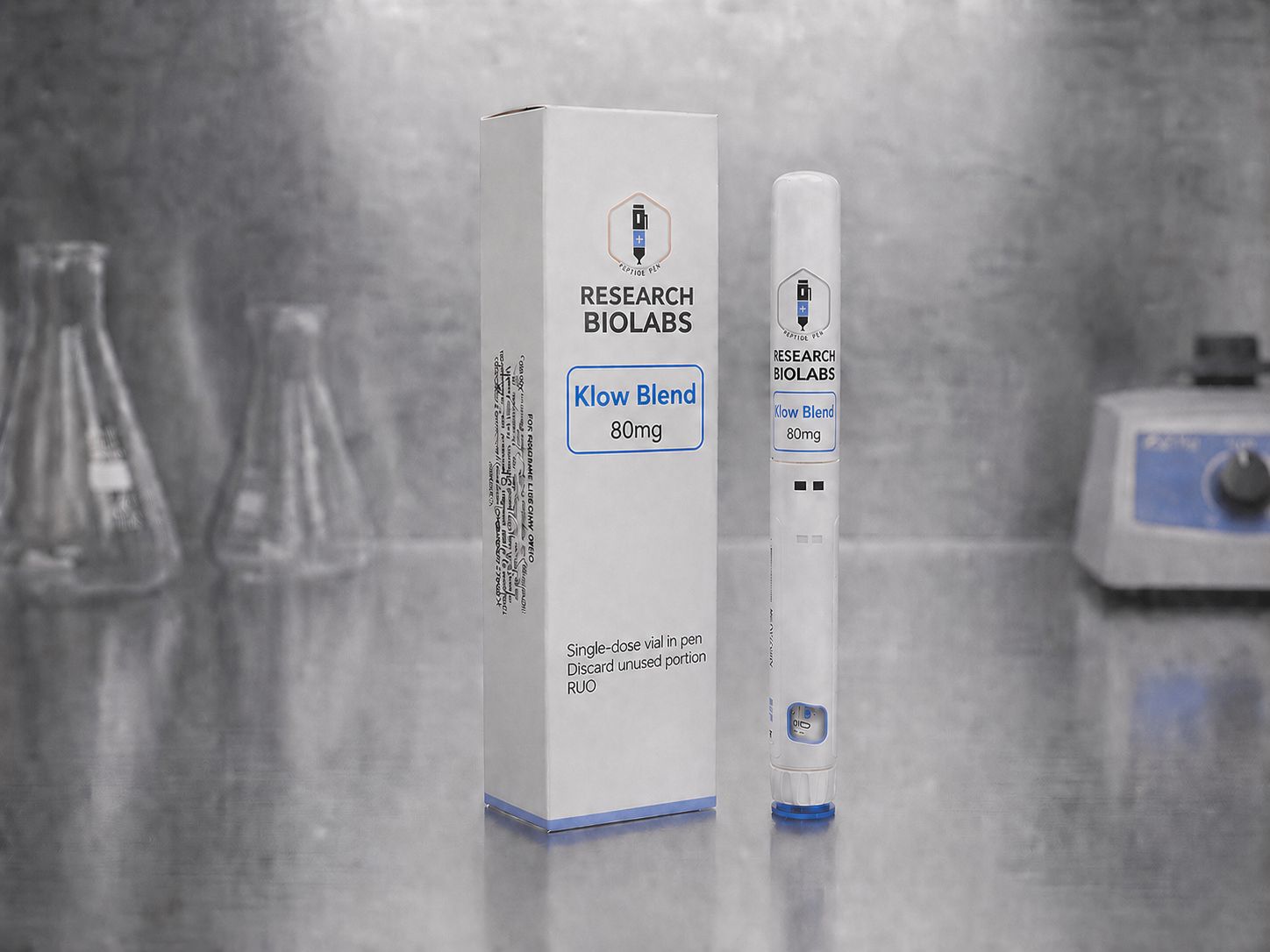
Klow Blend 80mg (BPC-157 10mg + GHK-Cu 50mg + TB-500 10mg + KPV 10mg)
Klow Blend 80mg combines BPC-157 (10mg), GHK-Cu (50mg), TB-500 (10mg), and KPV (10mg) into a premium multi-peptide formulation for laboratory research and scientific investigation. Researchers use this carefully prepared blend to investigate multiple biological pathways within a single formulation. Furthermore, each peptide contributes unique biochemical properties, making the blend valuable for studies involving cellular signalling, tissue repair mechanisms, collagen synthesis, regenerative biology, and inflammatory response pathways.
We produce every batch with research-grade lyophilised peptides and verify a purity of ≥98% through HPLC analysis. Additionally, our quality control process helps maintain consistency between batches, allowing researchers to achieve reliable and reproducible experimental conditions. Instead of preparing several individual peptides, laboratories can work with one precisely measured blend that simplifies handling and supports efficient research workflows.
The formulation contains a total of 80mg of peptide content, including BPC-157 (CAS 137525-51-0), GHK-Cu (CAS 89030-95-5), TB-500 (CAS 77591-33-4), and KPV (CAS 81733-19-7). Moreover, we stock Klow Blend in the UK and dispatch orders quickly through tracked Royal Mail delivery.
To maintain peptide integrity, store the vial at -20°C in a dry, temperature-controlled environment. Keep the vial tightly sealed, minimise exposure to moisture, and avoid repeated freeze-thaw cycles. Consequently, these storage practices help preserve product stability throughout the research process.
We supply Klow Blend exclusively for laboratory research. Researchers must not use this product for human or veterinary consumption, diagnosis, therapy, cosmetic procedures, or food applications. Finally, researchers should follow established laboratory safety procedures and comply with all applicable regulations when handling peptide materials.