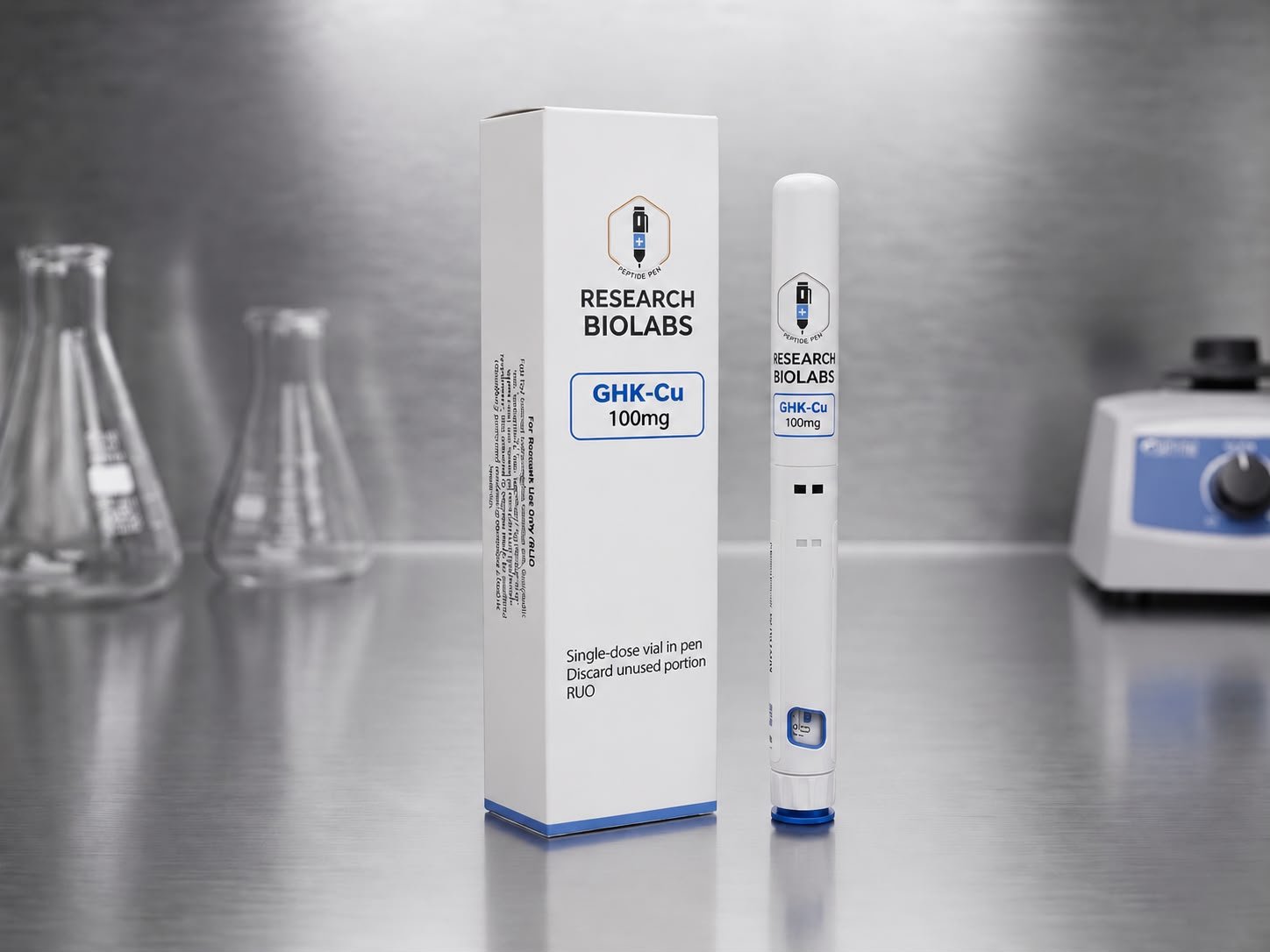
GHK-Cu
What is GHK-Cu?
GHK-Cu is a copper-binding tripeptide that researchers widely study for its role in cellular repair, regeneration, and anti-inflammatory activity. Additionally, GHK-Cu occurs naturally in the human body and plays a key role in tissue remodeling and healing processes. Because GHK-Cu binds copper ions efficiently, it supports important biochemical pathways linked to skin function and cellular health. As a result, GHK-Cu remains a valuable compound in advanced laboratory research.
GHK-Cu Chemical Information
CAS Number: 89030-95-5
PubChem CID: 16218782
ChemSpider ID: 167368
Molecular Formula: C14H24CuN6O4
Molecular Weight: ~451.91 g/mol
GHK-Cu Specifications and Formulation
This GHK-Cu product comes as a high-purity, lyophilised peptide. Furthermore, the freeze-dried powder format improves stability and extends shelf life. In addition, it allows researchers to reconstitute GHK-Cu according to specific experimental requirements.
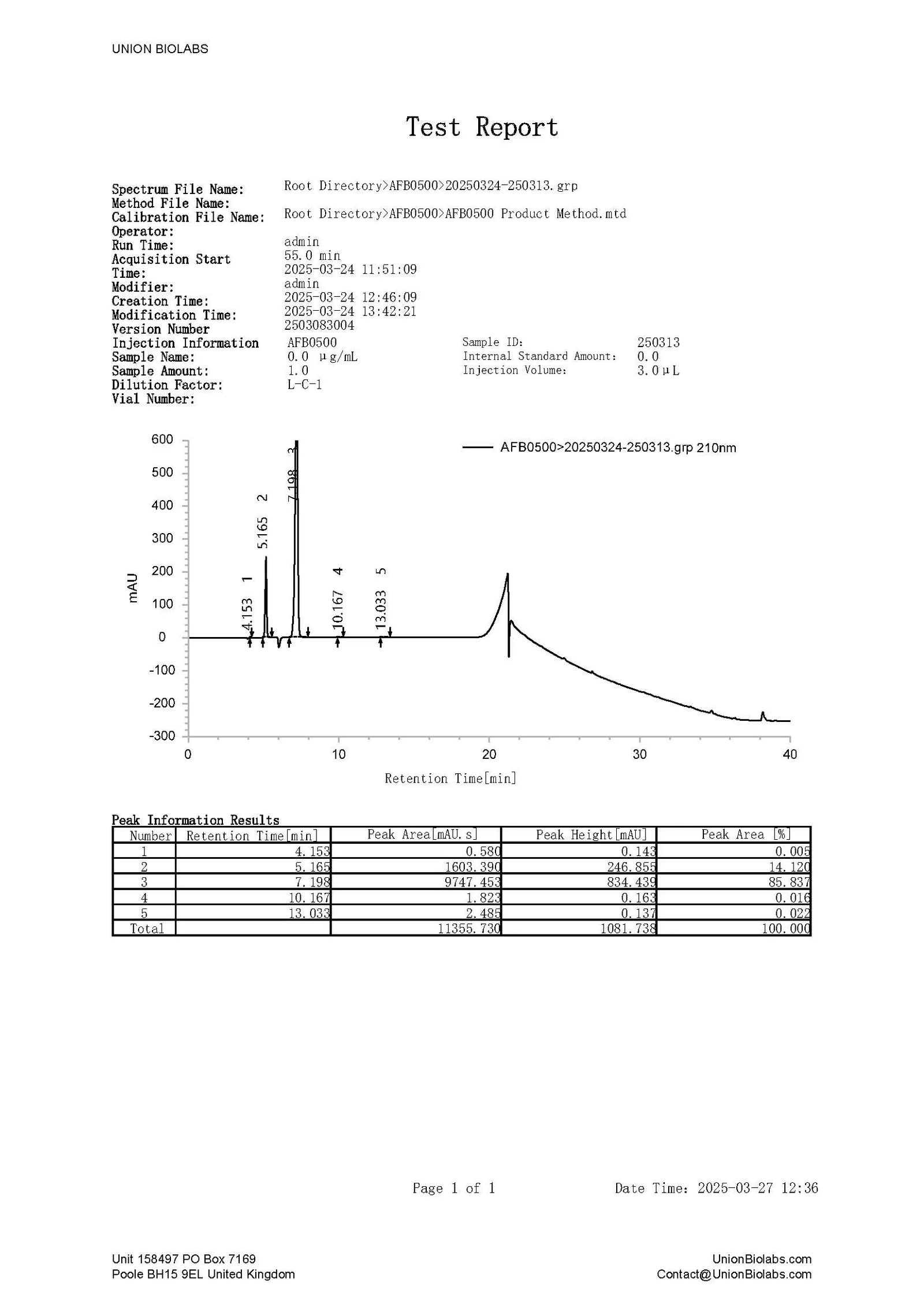
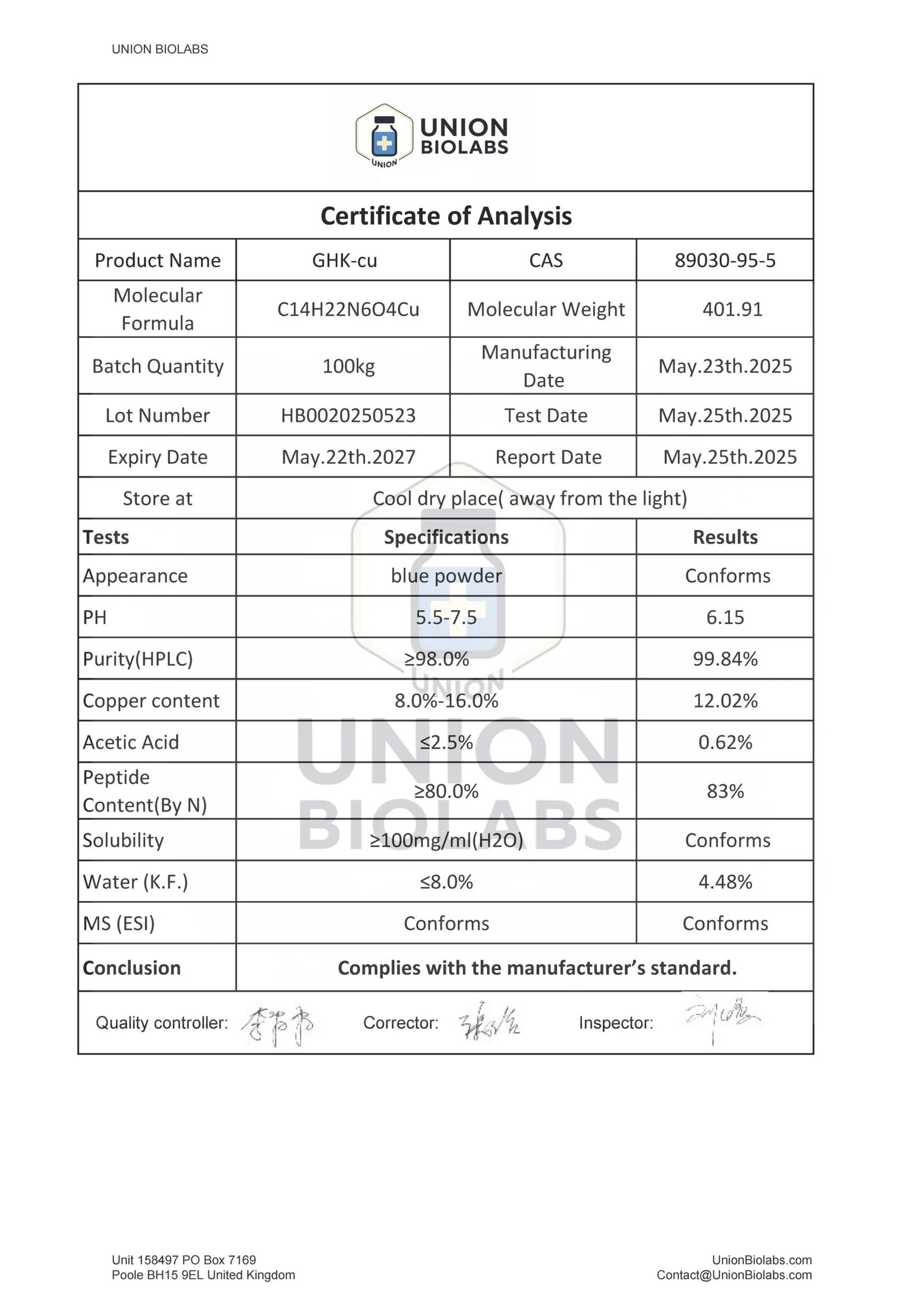
Each batch undergoes strict quality control procedures. Therefore, researchers can rely on consistent quality across different production lots. Purity is verified using HPLC testing, with results reaching ≥99%.
Product Specifications
- Content: GHK-Cu (lyophilised peptide)
- Form: Freeze-dried powder
- Purity: ≥99% (HPLC-verified)
- COA: Certificate of Analysis provided for every batch
- Storage: –20°C in temperature-controlled facility until dispatch
- Origin: UK-stocked for rapid delivery
Applications of GHK-Cu in Research
Researchers use GHK-Cu in studies involving cellular repair mechanisms, tissue regeneration, and biochemical signalling. Moreover, GHK-Cu is frequently included in investigations focused on skin biology and extracellular matrix remodeling.
Typical research areas include:
- Cellular repair pathways
- Tissue regeneration studies
- Copper-binding peptide interactions
- Inflammatory response research
- Skin cell function analysis
- Extracellular matrix studies
As a result, GHK-Cu continues to be an important tool in peptide-based research models.
Storage and Stability of GHK-Cu
Proper storage conditions help maintain the stability of GHK-Cu. However, improper handling may reduce peptide integrity over time.
- Store at –20°C in a controlled environment
- Keep protected from heat and moisture
- Avoid repeated freeze-thaw cycles
Additionally, each batch is stored under controlled conditions prior to dispatch to preserve quality.
Intended Use of GHK-Cu
GHK-Cu is intended strictly for laboratory research purposes. It is not approved for human or veterinary use. Furthermore, it must not be used for diagnostic, therapeutic, or consumption purposes.
Researchers must ensure compliance with all applicable local regulations when handling GHK-Cu.
Why Researchers Use GHK-Cu
GHK-Cu is valued in laboratory environments due to its stability and well-documented biochemical properties. Additionally, it provides consistent performance in controlled research conditions. Therefore, it remains widely used in peptide and cellular biology studies.
SEO Keywords for GHK-Cu
GHK-Cu, GHK-Cu peptide, copper peptide GHK-Cu, GHK-Cu lyophilised, GHK-Cu CAS 89030-95-5, GHK-Cu research peptide, GHK-Cu laboratory use, copper tripeptide, GHK-Cu skin research peptide.