In Stock
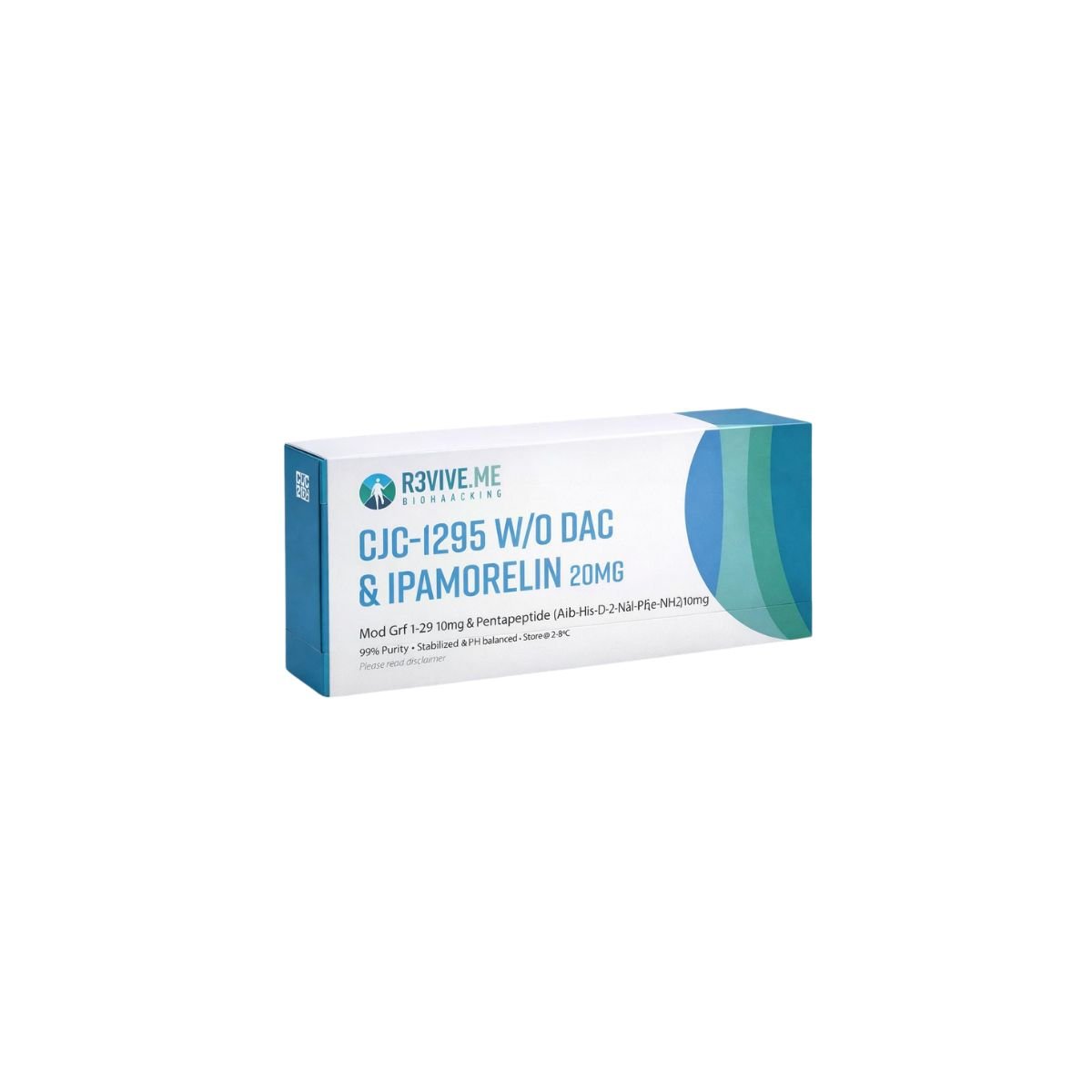
R3VIVE ME CJC-1295 w/o DAC & Ipamorelin 20mg
-
20mg
R3VIVE ME CJC-1295 w/o DAC & Ipamorelin 20mg is a dual-peptide research formulation examined in laboratory environments for growth hormone signalling studies, recovery-pathway observation, and peptide-response modelling. This advanced peptide combination contains Modified GRF 1-29 (CJC-1295 without DAC) and Ipamorelin in a structured research blend designed for controlled laboratory applications. For research use only.
Technical specifications
Molecular formula
-
Purity
-
Storage
-
CAS Number
-
Molecular weight
-
Reconstitution
-
Research applications
- For research use only
Not for human consumption, veterinary, or diagnostic use. Handled by qualified researchers only.
Description
R3VIVE ME CJC-1295 w/o DAC & Ipamorelin 20mg
R3VIVE ME CJC-1295 w/o DAC & Ipamorelin 20mg is a research-grade peptide blend designed for laboratory studies involving growth hormone pathways, recovery-focused signalling, and peptide-response modelling. This formulation combines two research peptides:- Modified GRF 1-29 (CJC-1295 without DAC) – 10mg
- Ipamorelin – 10mg
Key Features – R3VIVE ME CJC-1295
- Dual-peptide growth hormone research blend
- Contains 10mg CJC-1295 without DAC and 10mg Ipamorelin
- Supports research into GH signalling pathways
- Suitable for recovery-response studies
- Useful for peptide interaction modelling
- Supports regenerative and tissue-related research models
- Research-grade peptide formulation
- Intended strictly for controlled laboratory research
Research Applications
Researchers may use R3VIVE ME CJC-1295 w/o DAC & Ipamorelin 20mg in experimental models that investigate growth hormone signalling and peptide interactions. For example, laboratory studies may focus on:- Pulsatile growth hormone signalling
- GHRH pathway activity
- Ghrelin receptor interaction
- Growth hormone secretagogue pathways
- Recovery-response mechanisms
- Tissue-support signalling
- Regenerative research models
- Peptide-response analysis
How to Use – Research Reference Only
Researchers evaluate peptide blends through structured laboratory protocols in controlled scientific environments. Consequently, experimental concentrations, analytical methods, and research conditions depend on the objectives and design of each individual study. Researchers should also follow appropriate laboratory procedures when preparing, handling, storing, and analysing research materials. This information provides scientific context only and does not offer instructions for human use.Stacking – Research Context
In laboratory environments, researchers may examine this peptide blend alongside other compounds when a study requires investigation of multiple biological pathways. For instance, research models may include:- Recovery peptide formulations
- NAD+ metabolic pathway studies
- Regenerative research compounds
- Tissue-support research compounds
- Cellular recovery models